What are the ADR PPE Requirements?
ADR PPE requirements depend on the dangerous goods being transported and the risks identified for the journey. Mandatory ADR equipment includes items such as eye protection, protective gloves and high-visibility clothing, while additional PPE may be required following a risk assessment, particularly where drivers could be exposed to spills or toxic substances. The right PPE should therefore be selected based on the vehicle, load, and expected emergency response.
ADR PPE Requirements – Are you providing adequate protection?
Learn about ADR & the use of the correct PPE equipment needed for the transportation of hazardous goods.
What PPE Is Required Under ADR?
ADR specifies certain mandatory safety equipment, but the exact PPE needed for a driver depends on the dangerous goods carried and the risks associated with the transport operation. Employers and operators may need to provide additional PPE where the risk assessment identifies potential exposure to hazardous substances.
Under ADR law, the only items of PPE required are eye protection, a warning vest, protective gloves, and an emergency escape mask if a toxic product is being carried. We frequently get questions about whether other protection should be supplied and what standards the PPE should meet so this blog is written to help provide some answers and points for consideration.
Is there a specification for PPE according to ADR?
Not all ADR PPE has one universal specification. The required equipment depends on the circumstances, while additional PPE should be selected based on the hazards posed by the load and the operator’s risk assessment.
The only item of mandatory ADR PPE which has a specification is the emergency escape mask, which is required for drivers of vehicles containing toxic product. The regulations specify that the escape mask should meet ABEK1(or2)P3. The Government guidance makes the following points regarding the suitability of PPE being carried:
- ‘Mandatory Items for all vehicles (Wheel chocks, warning signs, pocket lamp, high visibility jacket, gloves, eye protection). It is not the role of the enforcement officer (VOSA or Police) to judge suitability of equipment. Concerns should be reported to HSE’
- Use judgement. E.g. only one item missing may justify written report (RC3). Several types of gloves or eye protection may be seen. Doubts about condition or suitability should be recorded without reference to risk and referred to HSE with details.
- Classes 2.3 and 6.1 Emergency escape mask
This equipment may be in a vacuum sealed bag with a long ”shelf life” and should not be opened for routine checks
This puts the onus back onto the haulier to select suitable gloves, eye protection and any other supplementary (non-mandatory) PPE. Hazchem Safety recommends chemical gloves meeting EN374 type B as a minimum, indirect vent chemical goggles to EN 166 for the eye protection and a hi-vis waistcoat meeting EN20471 class 2.
-

Class 3 Vehicle & Driver ADR Kit
DK0030 £179.00 excl. VAT. Add to basket -
The Silver ADR & PPE Kit
DK0025 £210.00 excl. VAT. Select options This product has multiple variants. The options may be chosen on the product page -
Vehicle & Driver ADR Kit For HGVs
VK0010 £425.00 excl. VAT. Add to basket
When Is Additional PPE Required for ADR Transport?
Additional PPE may be needed where drivers are expected to respond to spills or other incidents and their risk assessment identifies potential exposure to the dangerous goods being carried.
The instructions in writing specify the following action in the event of an accident or emergency:
- Where appropriate and safe to do so, use on-board equipment to prevent leakages into the aquatic environment or the sewage system and to contain spillages;
- Move away from the vicinity of the accident or emergency, advise other persons to move away and follow the advice of the emergency services;
- Remove any contaminated clothing and used contaminated protective equipment and dispose of it safely.
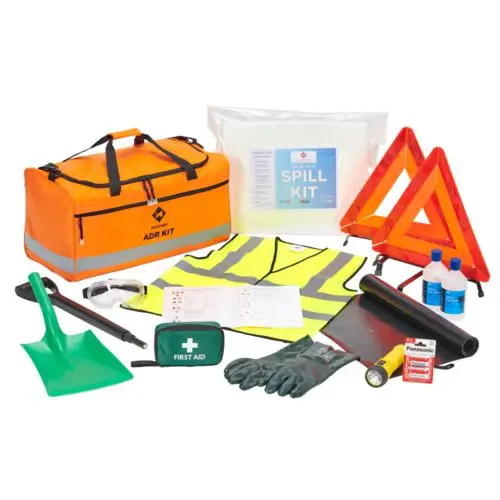
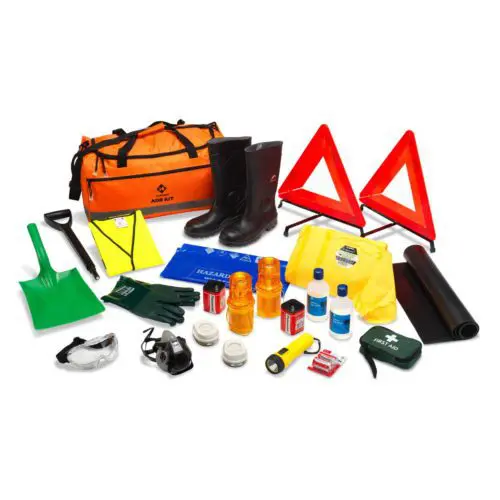
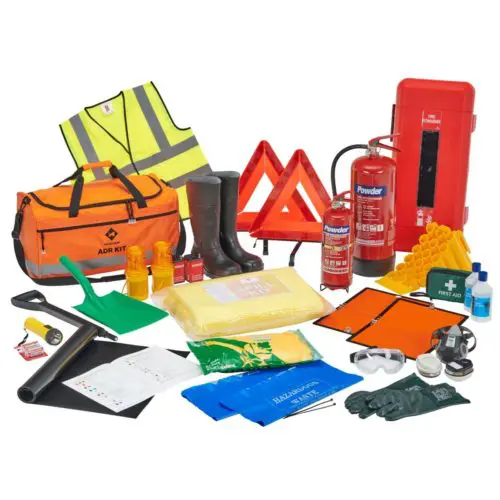
If the driver is to fulfil this responsibility, a risk assessment may indicate the need for a chemical protective suit, boots and possibly a full-face covering. As a haulage company, you will need to assess whether your drivers are expected to make reasonable and safe attempts to contain any spills which occur and, in which case, what suitable PPE should be worn. Or whether you expressly state that they shouldn’t attempt to contain or clear-up spills, in which case only the mandatory PPE would need to be carried. Hazchem Safety has a range of ADR kits covering the basic minimum requirement in the bronze ADR kit through to the Gold ADR kit, which enables drivers to safely contain spills of some of the most aggressive chemicals.
Drivers should only respond in these situations if trained, and it is safe to do so. Hazchem Safety strongly recommends that all drivers attend first-responder spill training, which gives a basic understanding of spill response, PPE requirements and environmental responsibilities.
What Additional PPE Might ADR Drivers Need?
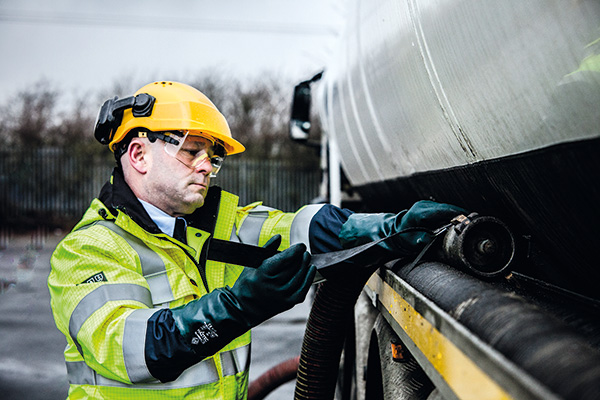
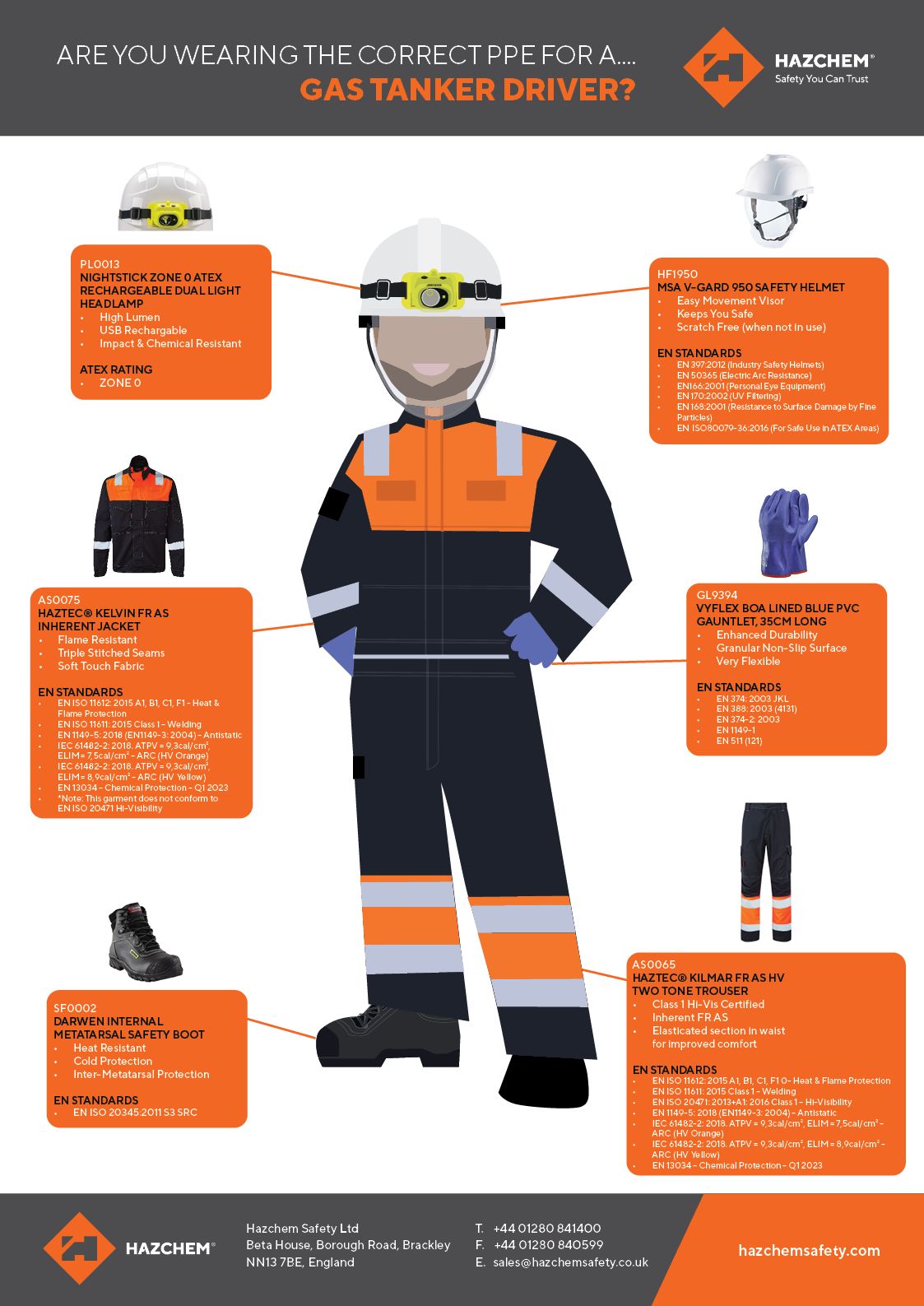
Although it is not strictly our responsibility to tell you what PPE is best, we have had over 40 years of experience when it comes to PPE for drivers and operators in the Gas Industry. So we have come up with some recommendations below for both ladies and men working in this industry.
What PPE is mandatory under ADR?
ADR requires certain safety equipment to be carried, including protective gloves, eye protection and high-visibility clothing. Additional PPE depends on the dangerous goods being transported and the risks identified by the operator. Emergency escape equipment may also be required for certain toxic substances. Operators should distinguish between mandatory ADR equipment and PPE required by their own risk assessment.
Do ADR PPE requirements vary by dangerous goods class?
Yes. The PPE required can vary depending on the hazards posed by the substance being transported. For example, toxic, corrosive and flammable products can create different exposure risks. Operators should consider the substance, transport conditions and potential emergency scenarios when determining whether additional chemical, respiratory, protective clothing or spill-response PPE is required.
Does every ADR vehicle need the same PPE?
No. ADR equipment and PPE requirements can vary depending on the vehicle, the dangerous goods being carried, and the transport circumstances. A fleet carrying different loads may therefore need different equipment configurations. Operators should avoid assuming that a single standard kit is suitable for every vehicle without first checking the relevant requirements and risk assessment.
What PPE should an ADR driver carry for a chemical spill?
This depends on the substance and the driver’s expected role during an incident. Where drivers are trained and expected to make a safe first response, additional chemical-resistant clothing, gloves, footwear or respiratory protection may be appropriate. The equipment should be selected against the hazards identified in the risk assessment and emergency procedures.
How can I make sure my ADR vehicles are inspection-ready?
Check that required equipment is present, suitable, accessible and in good condition, and that items with expiry dates are still valid. For larger fleets, standardising kit configurations by vehicle and load type can reduce missing or inconsistent equipment and make routine checks easier.
We know that refineries/terminals are becoming more stringent on the correct PPE being worn when loading gas, so it is important you have suitable PPE.
To discuss further with us please call 01280 841400 or email sales@hazchemsafety.com.